IVPN is built for privacy purists — anonymous signup, open-source apps, and Cure53 audits. But limited device connections and no streaming optimization make it a niche choice.
IVPN is built for privacy purists — anonymous signup, open-source apps, and Cure53 audits. But limited device connections and no streaming optimization make it a niche choice.
Speed Lab Results
10of 15 ptsSolid EverydaySpeeds
Ranked #11 of 22 VPNs we tested for speed.
IVPN ranked #11 of 22 providers in our independent speed testing.
IVPN excels across the board here, scoring 5/5 for Security and 9/10 for Protocol.
Security · Audited5/5
Protocol · WireGuard9/10
View detailed analysis
Encryption & Protocols
IVPN is purpose-built for privacy-first users. Its apps are fully open-source and have been audited by Cure53. The service accepts anonymous signup with no email required, and payments via cryptocurrency or cash.
Encryption: AES-256 (military-grade encryption)
Protocols: WireGuard, OpenVPN
Kill switch: Available on all platforms
Multi-hop: Pro plan routes traffic through two VPN servers for added anonymity
Privacy Credentials
Jurisdiction: Gibraltar — outside major surveillance alliances
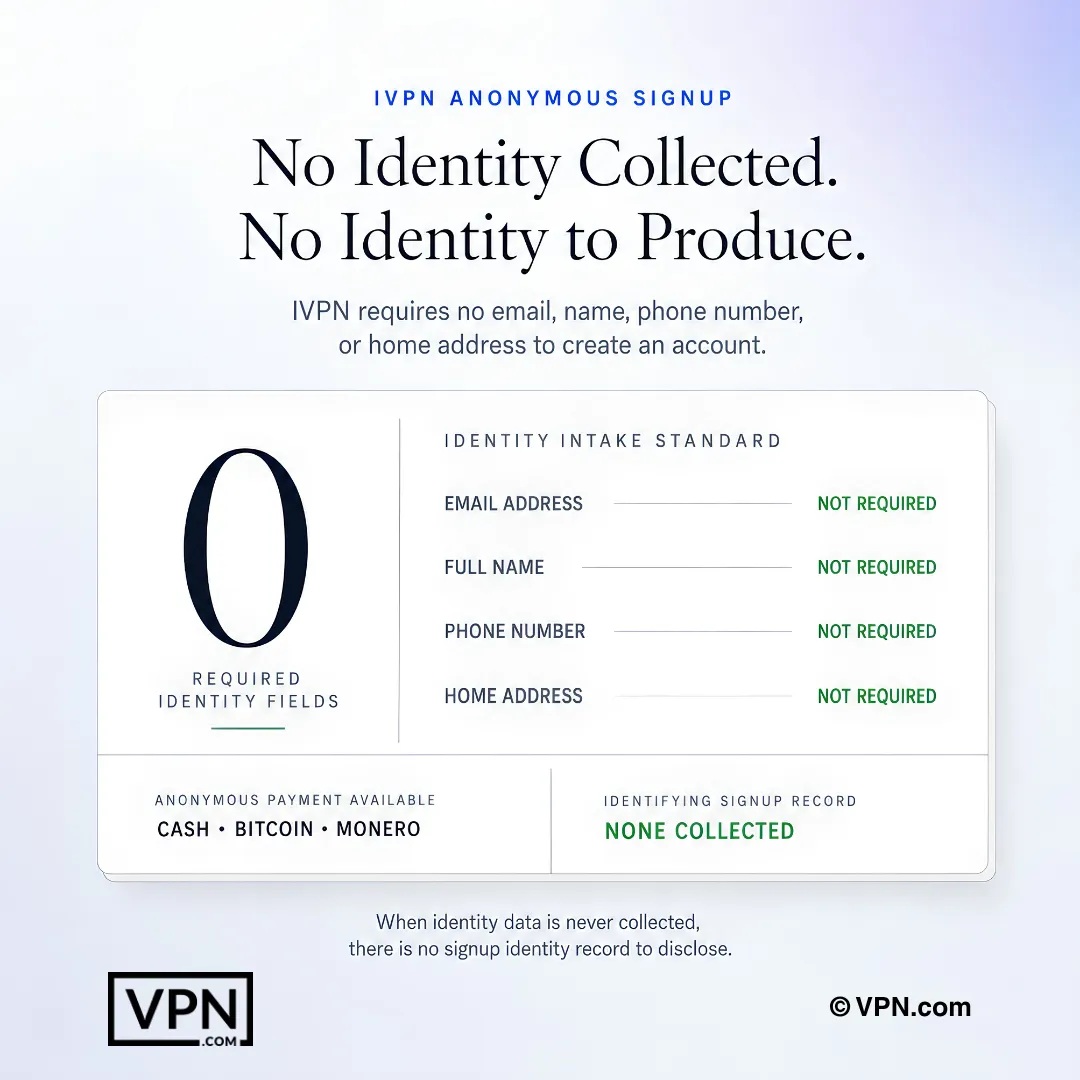
Anonymous signup: No email or personal information required to create an account
Payment: Accepts Bitcoin, Monero, and physical cash for fully anonymous billing
Open-source: All client apps are publicly available on GitHub for independent verification
Audits: Cure53 app security audit completed
Advanced Features
Tracker blocker: Built-in DNS-based tracker and ad blocking
Multi-hop (Pro): Route traffic through two servers in different countries for layered anonymity
Port forwarding (Pro): Useful for P2P and self-hosted services
Streaming Performance
5of 10 ptsReliable forMost Platforms
Streaming is hit and miss.
Streaming support is limited compared to top competitors.
Streaming · Not focused5/10
View detailed analysis
Streaming Focus
IVPN is explicitly not optimized for streaming. The provider does not advertise Netflix access, SmartDNS, or dedicated streaming servers. Users who primarily want to access geo-restricted content should choose a streaming-focused provider instead.
No dedicated streaming servers
No SmartDNS functionality
45 country coverage limits geo-access options
Alternative Use Cases
Best for: Journalists, activists, and privacy-conscious users who prioritize anonymity over entertainment
P2P/Torrenting: Supported on Pro plan with port forwarding capability
Ease of Use
8of 20 ptsStraightforwardto Use
Usable, not effortless.
Room to improve in Devices (2-7), Connections (2 (Standard)).
Devices · 2-74/10
Connections · 2 (Standard)4/10
View detailed analysis
Setup & Interface
IVPN's apps are clean and functional, leaning toward simplicity without sacrificing the controls that privacy-focused users need. The interface is more minimal than consumer-oriented VPNs.
Installation: Standard setup; account creation requires no email
Connect flow: One-click connect with protocol selection
Platforms: Windows, macOS, Linux, iOS, Android
Simultaneous connections: 2 on Standard, 7 on Pro — below the mainstream average
Key Features
Open-source: Apps are publicly auditable — no black-box trust required
AntiTracker: DNS-level blocking of trackers and ads across the Standard plan
Firewall mode: Always-on VPN that blocks traffic if the connection drops
Trust & Value
23of 30 ptsA SolidTrack Record
Good value, with some trust caveats.
Strong scores in Money-Back (30 days), Support (Email/Chat), but Room to improve in Value ($6.00/mo).
User Sat. · 4.0/5.07/10
Value · $6.00/mo6/10
Money-Back · 30 days5/5
Support · Email/Chat5/5
Real-user rating
⭐4.06App Store · 250 reviews
⭐3.44Google Play · 2K reviews
Plans & Pricing
IVPN uses a transparent flat-rate pricing model with no multi-year lock-in discounts. The annual plan saves approximately 17% compared to monthly billing. Accepts crypto and cash for anonymous payment.
Same plan, same features. The only difference is the renewal term. Pay for 1 years up front and the rate drops from $6.00 to about $5.00 a month: 17% off, roughly $12 saved over the term.
All plans and add-ons
Compare all plans
Pick a billing period and compare every tier side by side.
Show prices for
Standard2 devices★ Recommended
Best for Privacy-focused solo users who need essential VPN on 2 devices
A plain-language breakdown of everything in the plans above: what each feature is, who it helps, and whether it is worth paying for.
Server networkIncluded in Standard and Pro
What it isA global network of servers you can route your connection through.
What it does for youConnect to a nearby server for the fastest speeds, or one abroad to watch content and reach sites as if you were in that country.
Kill switch & threat protectionIncluded in Standard and Pro
What it isA safety switch tied to your VPN connection, often paired with threat protection.
What it does for youCuts your internet the instant the VPN drops, so your real location never leaks. Paired threat protection blocks ads, trackers, and dangerous sites.
Simultaneous devicesIncluded in Standard and Pro
What it isHow many devices you can protect on one account at the same time.
What it does for youCover your phone, laptop, tablet, and more without logging out of one to use another.
Multi-hop (Double VPN)Included in Pro
What it isRouting your connection through two VPN servers instead of one.
What it does for youAdds a second layer of anonymity for extra-sensitive browsing, at some cost to speed.
All plans include:
2-7 Simultaneous Connections700+ Servers in 45 CountriesAES-256 Encryption & Kill SwitchOpen-Source Apps (Cure53 Audited)Anonymous Signup — No Email Required
IVPN is a privacy tool first and a VPN second. Anonymous signup requires no email, no name, no identifying data. Payment options include Monero, Bitcoin, and physical cash. Every architectural choice favors user anonymity over mass-market appeal.
The company operates from Gibraltar, outside the Five Eyes, Nine Eyes, and Fourteen Eyes surveillance alliances. All client apps are fully open source. Cure53 has audited the infrastructure. These are not marketing bullet points. They represent a fundamentally different product philosophy from VPN providers chasing subscriber volume.
That philosophy comes with real tradeoffs. The Standard plan allows only 2 simultaneous device connections. No long-term pricing discounts exist. Streaming optimization is absent by design. IVPN targets a specific audience and makes no effort to pretend otherwise.
IVPN Speed and Performance
The 520 Mbps SpeedLab result places IVPN at number 14 out of 22 tested providers. The 45 ms latency sits in a reasonable range for everyday use. Neither number will impress speed chasers, but both numbers serve IVPN’s core audience well enough.
WireGuard is the default protocol on all platforms. It delivers the best speed results and lowest overhead. OpenVPN remains available for users who need it on specific networks or want TCP fallback for restrictive firewalls. IPSec/IKEv2 is also supported on iOS.
Multi-hop routing on the Pro plan adds a measurable speed penalty. Routing traffic through two servers in separate countries introduces extra latency and reduces throughput. Expect a 20-40% speed drop compared to single-hop WireGuard connections. For users who need multi-hop, the privacy gain justifies the cost. For general browsing and file downloads, single-hop WireGuard keeps things fast.
Video calls, gaming, and large downloads all perform adequately on nearby servers. The 700-server network across 45 countries is small compared to providers with thousands of servers. Users in regions with sparse server coverage may notice higher latency. Connecting from South America or Africa to the nearest IVPN server could push latency above 100 ms.
IVPN Security and Privacy
Gibraltar jurisdiction gives IVPN a strong legal foundation. The territory has no mandatory data retention laws. It sits outside major intelligence-sharing agreements. IVPN has published transparency reports and has never been compelled to hand over user data.
The logging policy is clear and verifiable. IVPN stores no connection logs, no traffic logs, no timestamps, and no bandwidth data. The anonymous signup process means there is nothing to link activity to an identity even if servers were seized. This is not a claim that requires trust alone. Cure53 conducted independent security audits of the apps and infrastructure, with results published publicly.
Encryption defaults are strong. WireGuard uses ChaCha20 for symmetric encryption and Curve25519 for key exchange. OpenVPN connections use AES-256-GCM. The built-in kill switch blocks all traffic if the VPN connection drops. It works at the firewall level, preventing leaks even during app crashes.
AntiTracker is IVPN’s DNS-level ad and tracker blocker. It operates on IVPN’s DNS servers and blocks known tracking domains before requests leave the tunnel. A “Hardcore Mode” option also blocks Google and Facebook tracking domains specifically. This feature runs without installing browser extensions or third-party software.
The Pro plan’s multi-hop routing sends traffic through two VPN servers in different countries. Entry and exit servers are user-selectable. This architecture makes traffic correlation attacks meaningfully harder. An adversary monitoring one server cannot easily match incoming and outgoing traffic without controlling both nodes. For journalists, activists, and whistleblowers, multi-hop is not a luxury feature.
IVPN also supports port forwarding on the Pro plan, which benefits users running services behind the VPN. The implementation is straightforward and does not compromise the no-logs policy.
IVPN Streaming and Content Access
IVPN does not optimize for streaming and does not claim to access specific platforms. Netflix, Disney+, BBC iPlayer, and other geo-restricted services may work on some servers sometimes. Reliable, consistent access is not guaranteed.
This is a deliberate product decision. IVPN’s engineering resources go toward privacy infrastructure, not playing cat-and-mouse with streaming platform VPN detection. No SmartDNS feature exists. No specialty streaming servers exist. No “optimized for Netflix” labels appear in the app.
Users who occasionally access a streaming service through IVPN may have success on certain servers. Users who need dependable streaming accessing should choose a different provider. IVPN is transparent about this limitation, which is more honest than providers that advertise streaming access they cannot consistently deliver.
IVPN Device Compatibility
IVPN offers native apps for Windows, macOS, Linux, iOS, and Android. All apps are open source and available on GitHub. The Linux client includes both GUI and command-line options, which is uncommon and valuable for technical users.
The Standard plan supports 2 simultaneous connections. The Pro plan raises that limit to 7. Both numbers fall below industry averages, where 5-10 simultaneous connections is typical and some providers offer unlimited devices. A household with multiple users and devices will hit the Pro plan ceiling quickly.
Router-level installation is possible using WireGuard or OpenVPN configurations. Running IVPN on a router counts as 1 connection and covers all devices on the network. This is the practical workaround for the device limit, though it requires manual configuration and a compatible router.
No browser extensions exist. No smart TV apps exist. No Fire TV Stick app exists. IVPN focuses on core platforms and does them well rather than spreading thin across every device category.
App quality is high across platforms. The interface is clean and minimal. Server selection, protocol switching, multi-hop configuration, and AntiTracker toggles are all accessible within 2-3 taps. Automatic connection rules let users set the VPN to activate on untrusted Wi-Fi networks. The apps feel purpose-built rather than templated.
Who Should Use IVPN
IVPN is built for users who prioritize verified, auditable privacy above convenience, server count, and streaming access. The ideal user understands threat models and wants a VPN provider that minimizes the data it can hand over, even under legal compulsion.
Journalists working with sensitive sources benefit from anonymous signup and multi-hop routing. Activists in restrictive environments benefit from the open-source codebase that anyone can inspect. Security researchers and privacy advocates benefit from a provider that submits to independent audits and publishes results.
IVPN also works well for technical users who want a no-nonsense VPN without bundled password managers, cloud storage, or other feature bloat. The product does one thing and does it with rigor.
Users who need more than 7 device connections should look elsewhere. Users who want reliable streaming accessing should look elsewhere. Users who want the lowest possible price on a 2-year plan should look elsewhere. IVPN’s 65/100 trust score reflects these practical limitations, not a deficiency in its core mission.
The honest summary: IVPN is a top-3 choice for privacy-first users and a poor fit for everyone else. That narrow focus is a feature, not a flaw.
Resources for this page
Charts and reference images from our testing, free to view and share.
IVPN minimizes signup data by allowing account creation without standard personal identity fields.
Yes. IVPN requires no email address, name, or identifying information to create an account. Payment can be made with Bitcoin, Monero, or physical cash, severing any link between billing and identity. Combined with a no-logs policy verified through Cure53’s independent audit, there’s effectively nothing tying an account to a real person.
Why does IVPN operate from Gibraltar instead of a more common jurisdiction?
Gibraltar sits outside the Five Eyes, Nine Eyes, and Fourteen Eyes surveillance alliances and has no mandatory data retention law forcing IVPN to log user activity. IVPN has published transparency reports confirming it has never been compelled to hand over user data, reinforcing a no-logs policy that Cure53 has already audited.
Can I actually verify IVPN’s no-logs claim, or is it just marketing?
It’s independently verifiable. IVPN’s client apps are fully open-source and published on GitHub, and Cure53 has audited both the apps and infrastructure with results published publicly. IVPN stores no connection logs, traffic logs, timestamps, or bandwidth data, and anonymous signup means there’s no identity to link to that data even under legal pressure.
What is IVPN’s multi-hop feature, and when is it worth using?
Multi-hop, available on the Pro plan, routes traffic through two VPN servers in different countries with user-selectable entry and exit points, making traffic correlation attacks meaningfully harder for anyone monitoring a single server. It costs roughly 20-40% of your speed versus single-hop WireGuard. Journalists, activists, and whistleblowers gain real protection from it; casual browsers generally don’t need it.
What protocols and encryption does IVPN use?
WireGuard is the default protocol on all platforms, using ChaCha20 for symmetric encryption and Curve25519 for key exchange. OpenVPN is also available with AES-256-GCM for networks that need TCP fallback, and IKEv2 is supported on iOS. A firewall-level kill switch blocks all traffic if the connection drops, even during an app crash.
How does IVPN’s speed compare to other VPN providers?
IVPN ranks #14 of 22 in our Speed Lab, aggregated from independent labs. WireGuard is the default protocol and delivers IVPN’s best throughput, while OpenVPN remains available as a fallback. Its 700+ server network across 45 countries is smaller than mainstream providers, so users far from a server, such as in South America or Africa, may notice higher latency.
Does IVPN reliably access Netflix or other streaming platforms?
No, IVPN doesn’t optimize for streaming and makes no claims about specific platforms. There’s no SmartDNS feature and no dedicated streaming servers, so access to Netflix, Disney+, or BBC iPlayer may work on some servers and not others. IVPN is transparent that its engineering focus is privacy infrastructure, not evading streaming platforms’ VPN detection.
How many devices can I run on IVPN at once?
It depends on the plan. The Standard plan covers 2 simultaneous devices, while the Pro plan raises that to 7, both below the industry-typical range. Multi-device households can install IVPN directly on a compatible router using WireGuard or OpenVPN configuration files, which counts as a single connection but protects every device on that network.
How much does IVPN cost, and are there long-term discounts?
IVPN starts from $6.00/month on its longest-term plan, and uses flat-rate pricing with no multi-year lock-in tiers. The annual plan saves roughly 17% versus paying monthly. The Pro plan, which adds multi-hop, port forwarding, and 7 device connections, costs more, but there’s no 2-year or 3-year plan to chase a cheaper rate.
What happens if IVPN doesn’t work out for me?
IVPN backs every plan with a 30-day money-back guarantee, giving you a full month to test the apps, server network, and multi-hop routing before committing. Since IVPN accepts anonymous payment via Bitcoin, Monero, or cash, confirm the refund process with support ahead of time if maintaining anonymity throughout the transaction matters to you.
How do I sign up for IVPN while keeping my identity private?
Skip the email field entirely: IVPN’s signup process requires no name, email, or personal information. Pay with Bitcoin, Monero, or physical cash to avoid a billing trail tied to your identity. From there, install the open-source app for your platform, published on GitHub for independent verification, and connect using WireGuard by default.
What if I need to cover more devices than IVPN’s Pro plan allows?
Install IVPN directly on a compatible router instead of individual devices. A router-level WireGuard or OpenVPN configuration counts as a single connection under the account limit but covers every device on that network, sidestepping the Standard plan’s 2-device and Pro plan’s 7-device ceilings. It requires manual setup, but it’s a practical workaround for larger households.
Why does my connection slow down noticeably when I turn on multi-hop?
That’s expected behavior, not a malfunction. Routing traffic through two VPN servers in different countries for multi-hop, available on the Pro plan, adds real latency and cuts throughput by roughly 20-40% versus single-hop WireGuard. If you don’t need the added correlation-attack resistance, switch back to single-hop WireGuard for everyday browsing, downloads, and video calls.
Compare Other VPN Providers
Independent speed tests and hands-on reviews for every major VPN.